In short
- PVC is water-resistant, quiet and feels warmer.
- Laminate has a hard, scratch-resistant top layer and is often more affordable.
- For kitchens, hallways and bathrooms we usually recommend PVC.
- For living rooms, bedrooms and attics both are a good choice.
How are they built up?
PVC (also called vinyl or LVT) is a synthetic floor with a design layer and a wear layer. It comes as a thin version for gluing and a thicker version with a click system. Laminate has a core of compressed wood fibre (HDF) with a photo layer and a hard top layer, and is floated.
PVC and laminate compared
| PVC | Laminate | |
|---|---|---|
| Water-resistant | Yes — suitable for damp rooms | Not as standard; moisture-resistant versions exist |
| Noise | Quiet, especially glued | Louder clicking sound; underlay is important |
| Feel | Warm and soft | Harder and cooler |
| Scratch-resistant | Good, depending on the wear layer | Very scratch-resistant |
| Underfloor heating | Excellent (especially glued) | Often possible with a suitable underlay |
| Price | Usually slightly higher | Often more affordable |
Advice per room
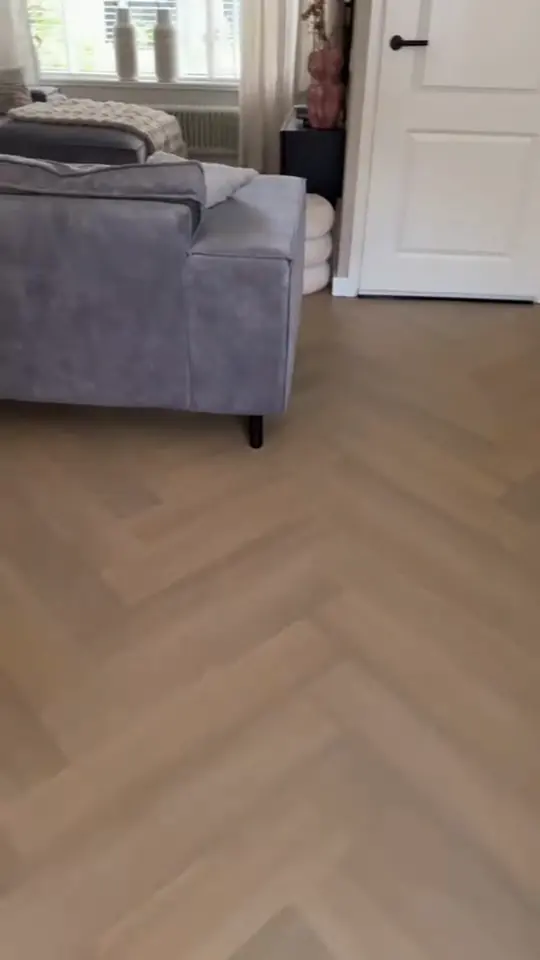
- Living room — both. For a quiet floor or underfloor heating choose PVC; for a scratch-resistant, affordable floor laminate is fine.
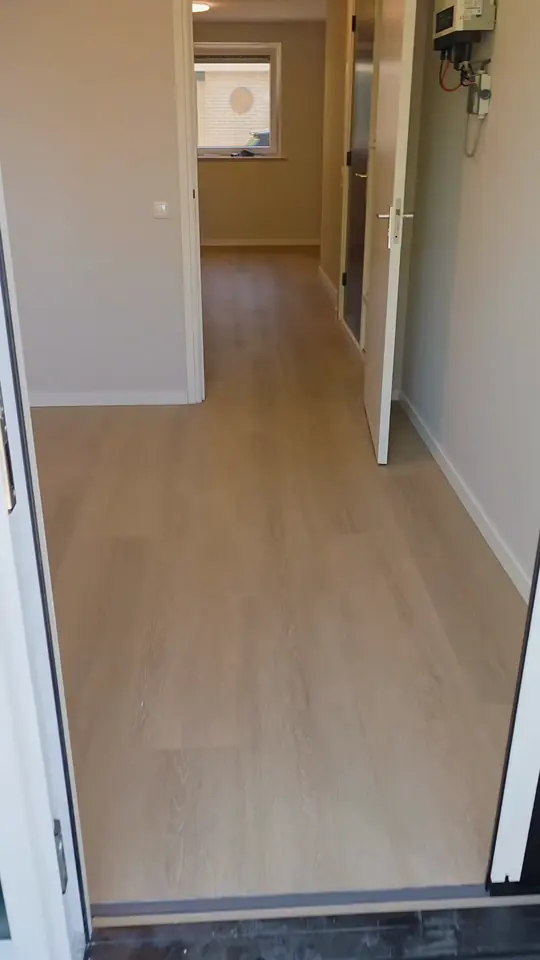
- Kitchen and hallway — PVC, because of moisture and dirt from outside. An entrance mat by the front door helps too.
- Bathroom — PVC; standard laminate is not suitable for wet rooms.
- Bedroom and attic — laminate is a practical and affordable choice here.
- Apartment — often glued PVC or a good sound-reducing underlay, because of impact noise and any owners’ association (VvE) requirements.
Can you combine them?
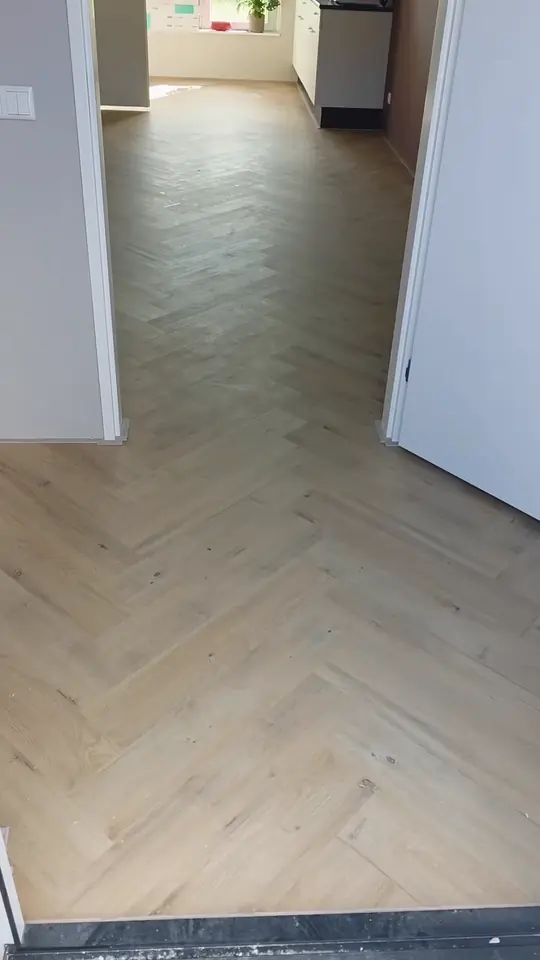
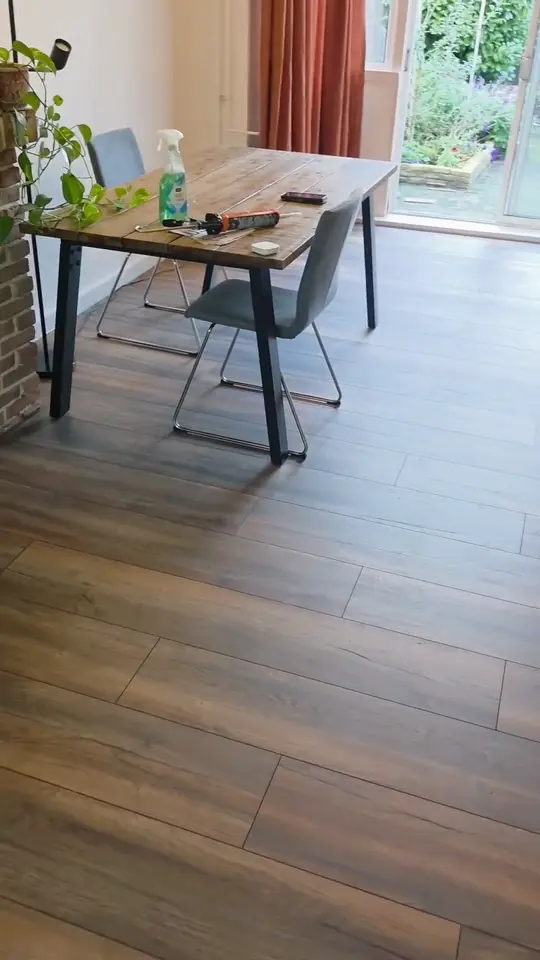
Certainly. A popular combination is PVC downstairs (living room, kitchen, hallway) and laminate upstairs (bedrooms, attic). With a matching colour or a calm transition at the stairs it looks like one whole. In Sneek and Leeuwarden, for example, we laid 50 and 45 m² of laminate, and in Indijk a glued PVC floor.
For both: the subfloor matters
Whether you choose PVC or laminate, a flat and dry subfloor is the foundation. Read more in How flat should a floor be for PVC? or see our services laminate flooring and glued PVC flooring.
Need help with your floor?
We handle the subfloor, installation and finishing — in Friesland, Groningen and Drenthe. Feel free to send a photo on WhatsApp for a first estimate.
Related services
This article gives general information and guidelines. The situation on site and the manufacturer’s instructions always take precedence.